In the factored form of the quadratic expression, the expression is in the form of two (or more) brackets.
$$y = a(x+b)(x+c)$$
In the factored form, the $b$ and $c$ coefficients describe where the x-intercepts of the parabola are (Figure 1).
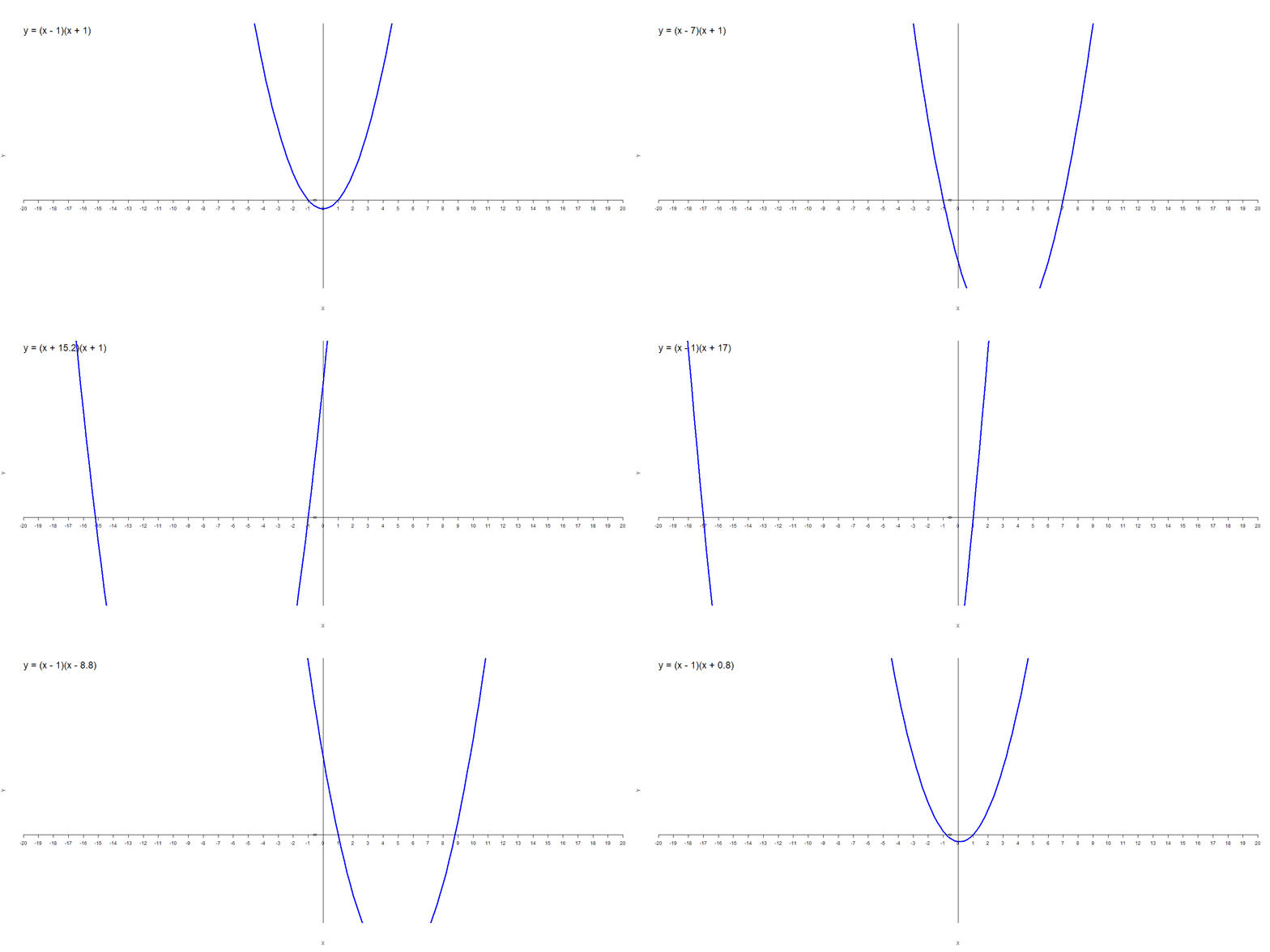
The $a$ coefficient on the other hand describes how steep the parabola is (Figure 2). However unlike the vertex form of the quadratic equation, it isn't as clear to see the relationship between this value and how steep the curve is.

The factored form is useful for analyzing where a parabola crosses the x-intercepts. This can be useful if the x-intercept is significant, this could be for example, if the x-intercept intercept is the ground, and the expression describes a flight path of an object for example.
Not every expression has a factored form, some expressions do not have x-intercepts, and so they don’t have a factored form. In these cases another form of the expression is more appropriate to describe the parabola.